History · October 27, 2026
The History of HERS, Part 3: 1999 to Present
On June 17, 1999, California's Title 20 HERS regulations took effect. From then on, California and the national program used the same acronym for two different jobs.
16 minute read · Anchors Aweigh Energy
On June 17, 1999, California's Title 20 HERS regulations (§§1670–1675) took effect. They created raters who do field verification and diagnostic testing for Title 24 compliance. (CEC HERS page, Wayback 2000) Around the same time, the national program was built on RESNET's mortgage-industry standards. From then on, the two programs used the same acronym for two different jobs. This part follows both up to October 2026 and compares them side by side.
2002–2006: national standards take shape
- RESNET and NASEO's Mortgage Industry National Home Energy Rating Systems Accreditation Standards were amended June 15, 2002 (RESNET 2002 standards). RESNET adopted enhancements on December 23, 2004 (RESNET). In 2006 it adopted further amendments, including streamlined provider accreditation (RESNET 2006 Annual Report).
- In 2002, RESNET incorporated as a 501(c)(3) nonprofit, and Energy Rated Homes of America merged into it. (RESNET history)
- In 2005, RESNET adopted amendments that dropped the "Classic HERS Score" and created the HERS Index. On the Index, 100 is the HERS reference home and 0 is a net zero energy home. Lower is better, like golf. (RESNET historical standards)
- ENERGY STAR Version 2 for new homes took effect January 1, 2007. It added a Thermal Bypass Checklist (insulation inspection) and right-sized HVAC. Version 3 phased in during 2011, and all homes permitted on or after January 1, 2012 had to use it. (ENERGY STAR history)
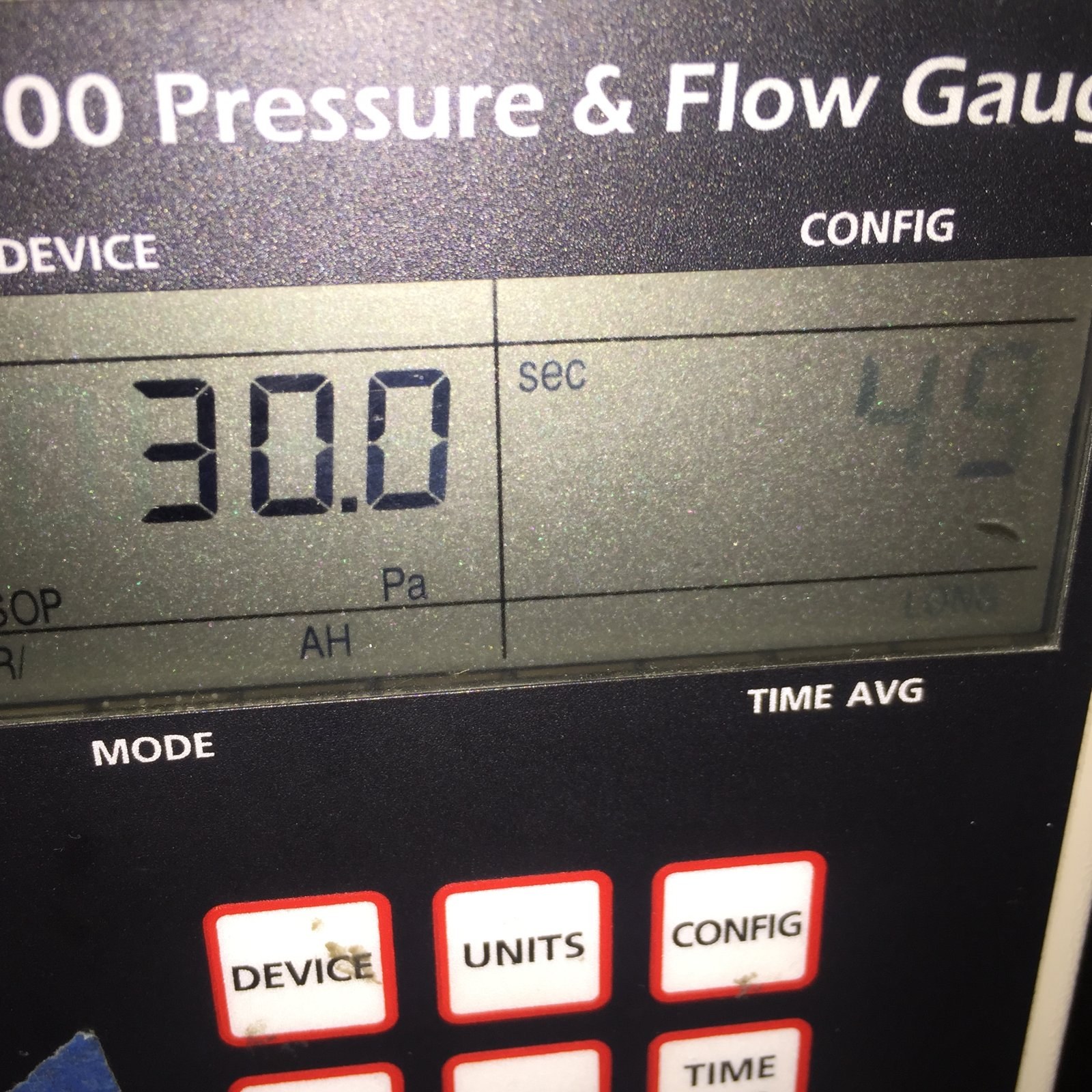
The DG-700 reading 30.0 Pa, a common test pressure for duct leakage. Photo: Anchors Aweigh Energy.
2013–2016: HERS gets written into the code book
In October 2013, the International Code Council added an Energy Rating Index (ERI) compliance option to the 2015 IECC. The target scores ran from 51 to 55, depending on climate zone. (RESNET: HERS Index and energy codes)
The math behind the ERI became an American National Standard. ANSI/RESNET 301-2014 was published March 7, 2014. It was republished in January 2016 as a joint RESNET/ICC standard, and mandatory compliance started January 15, 2016. Standard 380, which covers blower door, duct leakage, and ventilation airflow testing, followed in 2016. (RESNET ANSI standards)
Also in 2013, DOE launched the Challenge Home program, later renamed Zero Energy Ready Home. Its California requirements called for homes to be "verified and field-tested in accordance with HERS Standards by an approved verifier." (DOE ZERH year in review; DOE Challenge Home CA requirements) DOE now calls the program DOE Efficient New Homes. (DOE)
The tax credit chapter (45L)
The federal 45L credit pays builders for efficient new homes, and it leans on HERS-style verification:
- Congress created it in section 1332 of the Energy Policy Act of 2005 (Public Law 109-58). It paid up to $2,000 per qualifying home that cut heating and cooling energy by 50% against a code reference home. (Public Law 109-58; 26 U.S.C. §45L, 2012 ed.)
- For homes acquired before 2023, the credit was $1,000 or $2,000. (IRS)
- After the Inflation Reduction Act, a single-family home certified to ENERGY STAR earns $2,500, and one certified to DOE's program earns $5,000. (IRS Notice 2023-65; ENERGY STAR 45L FAQ)
- The 2025 One Big Beautiful Bill Act ended 45L for homes acquired after June 30, 2026. (IRS OBBB FAQ)
So as of today, October 2026, that incentive is gone for new sales.
Where RESNET is in 2026
RESNET still maintains the HERS Index, plus a HERS H2O water rating and a HERS Carbon Rating Index. (RESNET) ANSI/RESNET/ICC 301-2019 is mandatory for RESNET HERS ratings through December 31, 2026. The 2022 edition becomes mandatory January 1, 2027. (RESNET ANSI standards) RESNET reports that more than one million homes have received a HERS Index Score. (RESNET)
Meanwhile, in California: HERS as a code cop
California took a different road. Since its Title 20 HERS rules took effect in 1999, the rater's main job here has been code verification, not scoring homes.
- In 1999, the CEC adopted the Phase I HERS regulations, Title 20 §§1670–1675, under Docket 99-HERS-1. The Commission held its hearing on April 28, 1999. The Office of Administrative Law approved the rules, and they took effect on June 17, 1999. They set up raters to perform field verification and diagnostic testing (FV&DT) for Title 24 compliance. (CEC HERS page, 1999 snapshot via Wayback Machine; CEC report)
- The 2005 Title 24 standards leaned on those raters. When a project used a compliance option that needed field verification, such as sealed ducts tested to 6% leakage or less, the building department could not sign off until it had a HERS rater's signed Certificate of Field Verification and Diagnostic Testing. (CEC summary of 2005 Standards changes, copy hosted by title24data.com)
- "Phase II" of the HERS regulations added a second service, the Whole-House Home Energy Rating for new and existing homes, on one statewide rating scale. The CEC adopted it by order dated January 5, 2009, after a November 20, 2008 hearing. It incorporated the HERS Technical Manual (CEC-400-2008-012, December 2008). (CEC docket 08-HERS-02)
The key difference: a California rater isn't mainly scoring a house. The rater checks whether specific measures passed code, such as duct leakage, refrigerant charge, airflow, fan watt draw, and QII. Results go into a provider's data registry, and the permit can't close without them. Even when asbestos rules out a test, "HERS documentation is still required to close the permit." (CEC HERS program page)
At Anchors Aweigh, this is our daily work: HVAC change-out testing in San Diego, including ducts, airflow, QII, and CF-3R forms registered through CHEERS.
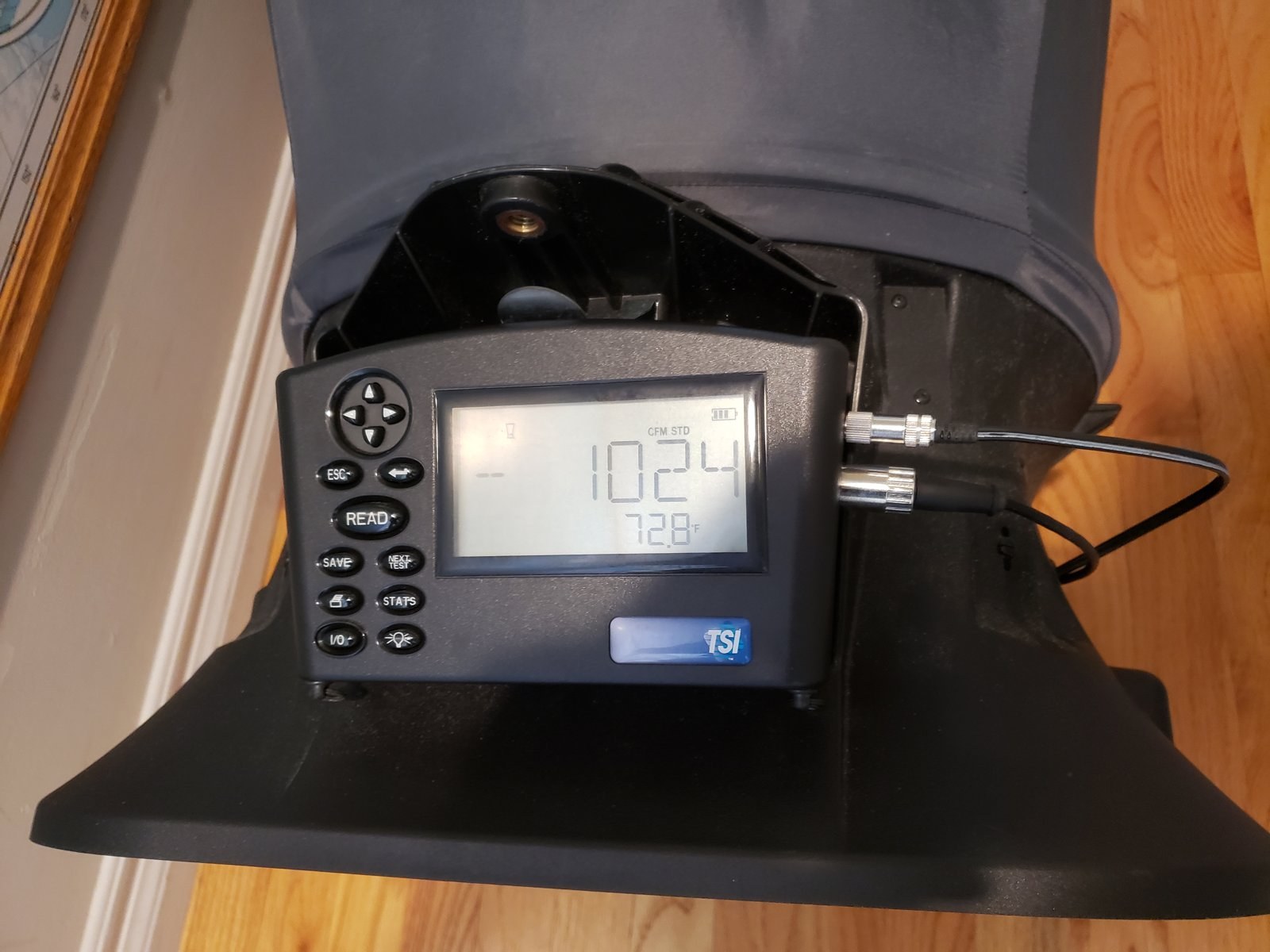
A flow hood reading 102.4 on a supply register, one of the airflow checks behind a CF-3R. Photo: Anchors Aweigh Energy.
Providers come and go
The CEC approves HERS (now ECC) providers. Providers train, certify, and oversee raters, and they run the data registries where CF-2R and CF-3R forms live. (CEC)
For years, California raters mostly chose between CalCERTS and CHEERS. The CEC credited CalCERTS with contributions "since 2005" (CEC bulletin). On July 22, 2024, CalCERTS told the CEC it would stop operating as a HERS provider on August 2, 2024, and its registry access ended September 2, 2024; enforcement agencies stopped accepting CalCERTS documents on September 3. (An earlier CEC bulletin had said September 1.) Raters and open projects had to move to CHEERS. (CEC advisory, Aug 16 2024) If you were a rater that August, you remember the scramble.
Today, CHEERS is approved as an ECC-Provider for the 2025 Energy Code; the CEC approved it on November 12, 2025. Golden State Registry is approved for a narrower scope (prescriptive 2022-code HVAC alterations), and its ECC-Provider application is under CEC staff review. (CEC provider page)
California HERS providers through the years
| Provider | First CEC approval | Status | Sources |
|---|---|---|---|
| CHEERS (California Home Energy Efficiency Rating System, now Services) | By 2001. It was the only CEC-approved provider at that point; the exact date is not online | Active; the only ECC-Provider for the 2025 code (approved Nov 12, 2025) | CEC HERS page, 2001 snapshot; SCE 2001 Energy Efficiency Annual Report; CEC providers page |
| CalCERTS (California Certified Energy Rating & Testing Services) | Applied in 2003; listed as approved by the CEC's 2003 page | Recertified on 2009, 2013, 2016 and 2019 applications; last recertified Feb 2024 (Order 24-0214-09). Gave up all approvals Aug 2, 2024 | CEC HERS page, 2003 snapshot; CalCERTS About; CalCERTS letter, TN 76191; CEC Order 24-0214-09; CalCERTS notice, TN 258647 |
| Golden State Registry (National Energy Testing Institute) | May 8, 2025 (applied Jan 27, 2023). Limited to prescriptive 2022-code HVAC alterations in single-family homes | ECC-Provider application under CEC review | CEC May 8, 2025 Orders, hosted by GSR; CEC providers page |
CHEERS, which says it was founded in 1990 (CHEERS), was the only provider until CalCERTS was approved in 2003. A 2001 CHEERS page says the CEC approved it "as the first home-energy rating provider" (CHEERS, 2001 Wayback snapshot). CHEERS and CalCERTS then shared the market for about two decades. Since August 2024, CHEERS has been the only full-scope provider.
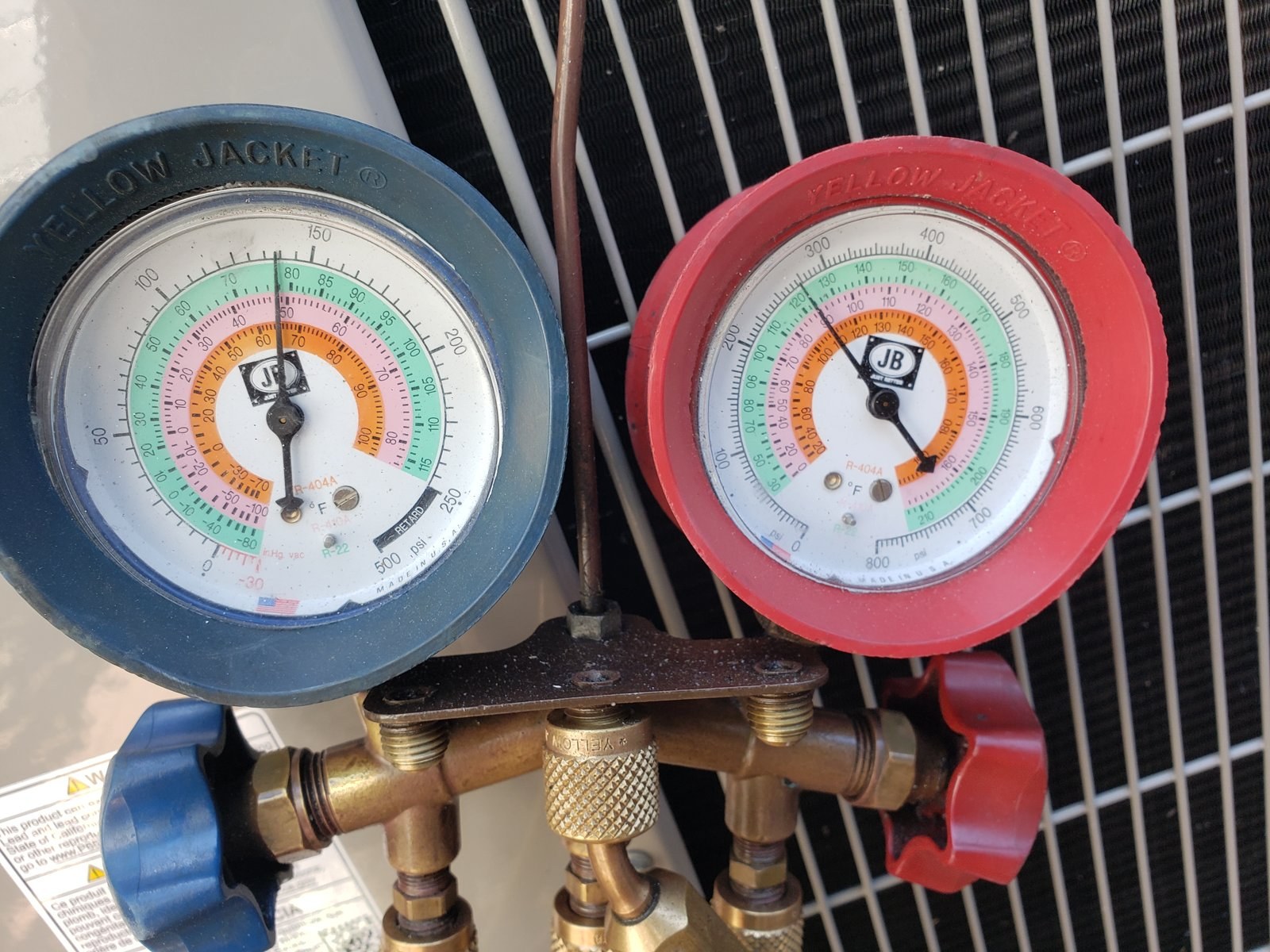
Refrigerant gauges on a condenser. Refrigerant charge is one of the measures a California rater verifies on many HVAC change-outs. Photo: Anchors Aweigh Energy.
2026: "HERS" becomes "ECC" in California
The 2025 Energy Code took effect January 1, 2026. (CEC 2025 adoption resolution) With it:
- The code-compliance testing moved out of Title 20 and into Title 24, Part 6, and Part 1 §10-103.3, under the new Energy Code Compliance (ECC) Program. (CEC ECC Program)
- All HERS providers became ECC-Providers, and all HERS raters became ECC-Raters.
- Forms for 2025-code projects say "ECC." Forms for older code cycles still say "HERS."
- The Title 20 HERS program now covers only whole-house ratings and home energy audits.
(CEC provider page; CEC HERS page)
The CEC says it is starting another rulemaking to update Title 20 and set up a new Home Energy Rating and Labeling program. (CEC) That's why you'll see "HERS/ECC" on our site: both names are in play for a while.
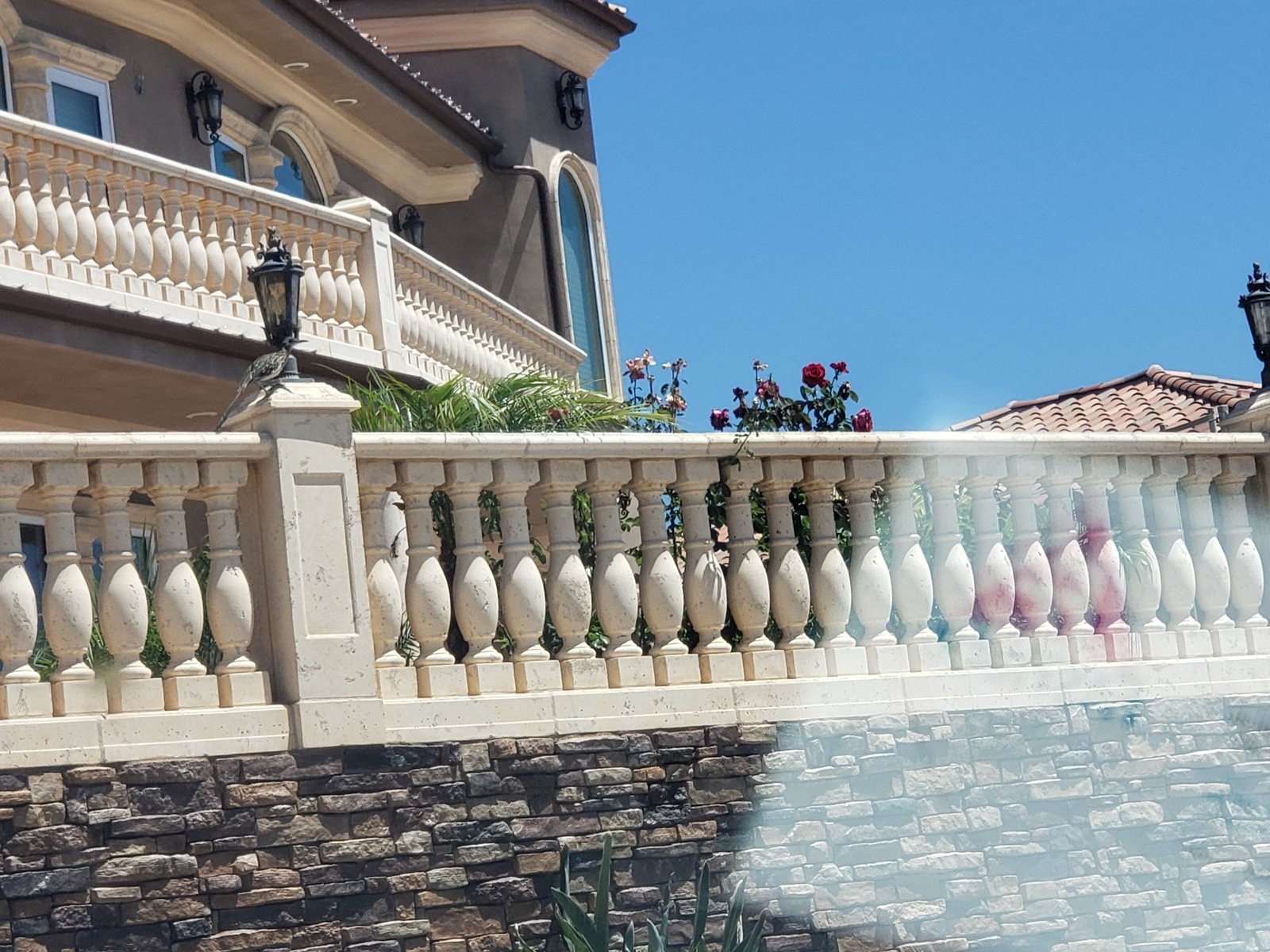
Same house, two possible report cards: a national HERS Index score, or California pass/fail verification for each measure. Photo: Anchors Aweigh Energy.
California vs. national, side by side
| California HERS → ECC | National RESNET HERS | |
|---|---|---|
| Who runs it | California Energy Commission (state regulation) | RESNET (private nonprofit standards body) |
| Legal basis | Title 20 §§1670–1675 (1999 on); Title 24 Parts 1 & 6 from Jan 1 2026 | ANSI/RESNET/ICC 301 and 380 standards |
| Main job | Pass/fail field verification of specific code measures | A whole-home score (HERS Index) |
| Mandatory? | Yes, when permitted work triggers it | Voluntary, unless a local code uses the ERI path or a program requires it |
| Typical trigger | HVAC change-outs, new homes, additions, ADUs | ENERGY STAR, DOE Efficient New Homes, IECC ERI path, (formerly) 45L |
| Paperwork | CF-2R/CF-3R registered in a CEC-approved provider registry | HERS rating certificate through a RESNET-accredited provider |
| Oversight | Provider quality assurance, CEC | RESNET provider QA and standards |
| 2026 status | Renamed ECC under the 2025 Energy Code | 301-2019 required through 2026; 301-2022 starts 2027 |
Sources: rows draw on the CEC and RESNET pages cited above.
Part 3 timeline
- Jun 17, 1999: CEC Phase I HERS regulations take effect.
- By 2001: CHEERS is the CEC's first approved provider.
- 2002: RESNET becomes a 501(c)(3). Its mortgage-industry standards are amended June 15.
- 2003: CalCERTS is approved as the second provider.
- Dec 23, 2004: RESNET standards enhancements adopted.
- 2005: The HERS Index replaces the classic score. Title 24 requires a HERS certificate for field-verified measures. EPAct 2005 §1332 creates 45L.
- 2007 / 2012: ENERGY STAR new homes Version 2 / Version 3.
- Jan 2009: CEC adopts Phase II whole-house ratings.
- Nov 2009: Anchors Aweigh Energy is founded in San Diego.
- Jan 2010: Bruce Cheney earns his first California HERS rater certification.
- 2013–2016: The ERI path enters the 2015 IECC. Standards 301 and 380 are published.
- 2023: IRA-amended 45L begins.
- Aug 2024: CalCERTS exits.
- May 8, 2025: Golden State Registry is approved for limited scope.
- Nov 12, 2025: CHEERS is approved as an ECC-Provider.
- Jan 1, 2026: HERS raters become ECC-Raters.
- Jun 30, 2026: 45L ends for homes acquired after this date.
- Jan 1, 2027: Standard 301-2022 becomes mandatory.
The bottom line
National HERS tells you how good a house is. California HERS, now ECC, tells you whether the work met code. Both depend on the same idea: someone independent has to actually test it. Ducts don't care what the paperwork says.
Anchors Aweigh Energy has been doing third-party ratings in San Diego since 2009 (About). Bruce also teaches free Title 24 classes through the utilities and Energy Code Ace (Training). Need a CF-3R, a Title 24 report (Title 24 services), or just a straight answer? Request a rating.
Sources
- http://web.archive.org/web/2000/http://www.energy.ca.gov/HERS/
- https://www.resnet.us/wp-content/uploads/RESNET-Mortgage-industry-National-HERS-Standards-2002.pdf
- https://www.resnet.us/wp-content/uploads/Adopted-Enhancements-to-the-Mortgage-Industry-National-Home-Energy-Rating-Standards.pdf
- http://www2.resnet.us/about/Annual_Report_2006.pdf
- http://web.archive.org/web/2016/http://www2.resnet.us/about/our-history
- https://www.resnet.us/about/standards/hers-standards-historical-information/
- https://www.energystar.gov/newhomes/history
- https://www.resnet.us/about/hers-index/
- https://www.resnet.us/about/standards/resnet-ansi/
- https://content.govdelivery.com/accounts/USEERE/bulletins/34679bb
- https://www.energy.gov/sites/prod/files/2013/11/f5/ch_california_requirements2013.pdf
- https://www.energy.gov/cmei/buildings/doe-efficient-new-homes-program
- https://www.congress.gov/109/plaws/publ58/PLAW-109publ58.pdf
- https://uscode.house.gov/view.xhtml?edition=2012&num=0&req=granuleid%3AUSC-2012-title26-section45L
- https://www.irs.gov/credits-deductions/credit-for-builders-of-energy-efficient-homes
- https://www.irs.gov/pub/irs-drop/n-23-65.pdf
- https://www.energystar.gov/about/federal-tax-credits/ss-45l-tax-credits-home-builders/ss-45l-tax-credit-frequently-asked-questions
- https://www.irs.gov/newsroom/faqs-for-modification-of-sections-25c-25d-25e-30c-30d-45l-45w-and-179d-under-public-law-119-21-139-stat-72-july-4-2025-commonly-known-as-the-one-big-beautiful-bill-obbb
- https://www.resnet.us/about/
- https://efiling.energy.ca.gov/GetDocument.aspx?DocumentContentId=85032&tn=250298
- https://www.title24data.com/articles/2005_standard_changes.pdf
- https://efiling.energy.ca.gov/Lists/DocketLog.aspx?docketnumber=08-HERS-02
- https://www.energy.ca.gov/programs-and-topics/programs/home-energy-rating-system-hers-program
- https://www.aae-hers.com/services/hers-ratings
- https://content.govdelivery.com/accounts/CNRA/bulletins/3ab072a
- https://content.govdelivery.com/accounts/CNRA/bulletins/3af4c06
- https://www.energy.ca.gov/programs-and-topics/programs/home-energy-rating-system-hers-program/home-energy-rating-system
- http://web.archive.org/web/2001id_/http://www.energy.ca.gov/HERS/
- https://www.sce.com/sites/default/files/inline-files/2001_Annual_Rep.pdf
- http://web.archive.org/web/2003/http://www.energy.ca.gov/HERS/
- https://www.calcerts.com/about
- https://efiling.energy.ca.gov/GetDocument.aspx?tn=76191
- https://efiling.energy.ca.gov/GetDocument.aspx?DocumentContentId=89891&tn=254491
- https://efiling.energy.ca.gov/GetDocument.aspx?DocumentContentId=94696&tn=258647
- http://gsregistry.org/images/TN263057_20250512T140430-Orders%20and%20Resolutions.pdf
- https://www.cheers.org/about/
- https://web.archive.org/web/20010918223039/http://www.cheers.org:80/about.htm
- https://efiling.energy.ca.gov/GetDocument.aspx?tn=259183
- https://www.energy.ca.gov/programs-and-topics/programs/energy-code-compliance-program
- https://www.aae-hers.com/about
- https://www.aae-hers.com/training-events
- https://www.aae-hers.com/services/title-24
- https://www.aae-hers.com/request
Previously: Part 1, 1970s–1989, and Part 2, 1989–1999. This is the final part of the series.