
History · October 27, 2026
The History of HERS, Part 1: 1970s to 1989
Today a HERS (now ECC) rater in California shows up with a blower door and a duct tester. Fifty years ago none of that existed.
8 minute read · Anchors Aweigh Energy
Today a HERS (now ECC) rater in California shows up with a blower door and a duct tester. Fifty years ago none of that existed. This is the story of how the energy crisis, the mortgage industry, and a few researchers set the stage for home energy ratings.
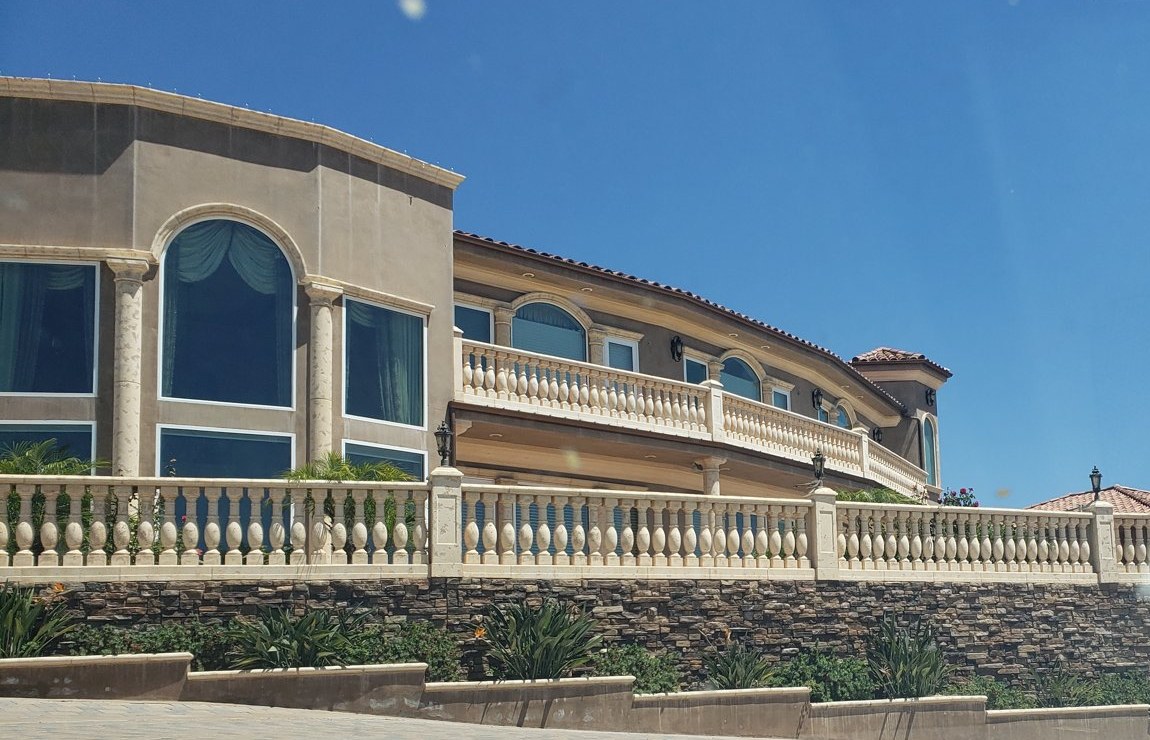
Big glass, big rooms, big loads: a large Mediterranean-style estate in Southern California. Today, Title 24 covers the heating and cooling in homes like this. Photo: Anchors Aweigh Energy.
1973: the embargo that started it all
In October 1973, during the Arab-Israeli War, Arab members of OPEC imposed an oil embargo on the United States. The price of a barrel of oil "first doubled, then quadrupled." The embargo lasted until March 1974. (U.S. Office of the Historian; State Dept. archive)
1974–1975: California creates the Energy Commission
Governor Reagan vetoed Assemblymember Charles Warren's energy bill in the fall of 1973. A few weeks later the oil crisis hit, and he reversed course. (CEC: 50 Years of Energy Leadership) He signed the Warren-Alquist State Energy Resources Conservation and Development Act on May 24, 1974 (Stats. 1974, ch. 276). (Online Archive of California, CEC records) The California Energy Commission (CEC) opened its doors in 1975. Among its duties, the law directed it to write energy standards for buildings and appliances. (CEC)
1975 and 1978: Washington acts too
- EPCA, 1975. The Energy Policy and Conservation Act (Public Law 94-163) became law on December 22, 1975. Among other things, it set up energy conservation programs for consumer products and for the states. (Public Law 94-163, GovInfo)
- NECPA, 1978. The National Energy Conservation Policy Act (Public Law 95-619) became law on November 9, 1978. Its residential title had utilities offer home energy audits to their customers. (Public Law 95-619, GovInfo)
1976–1978: the first Title 24 energy standards
The CEC says the Building Energy Efficiency Standards were "first adopted in 1976." Before that, starting in 1975, the Department of Housing and Community Development had adopted "rudimentary" energy standards. (CEC, 2022 Standards publication)
The residential standards had a bumpy start. On March 11, 1977, after nine public hearings, the CEC adopted amended residential standards. Their effective date, "as extended," was July 1, 1978. A builders' group, Building Code Action, sued. A trial court then threw out the wall, ceiling, and glazing rules, and an appeals court declined to keep them in force while the case was appealed. (Building Code Action v. Energy Resources Conservation & Dev. Com. (1979) 88 Cal.App.3d 913)
So builders were fighting over the cost of efficiency code from day one. Some things never change.
Late 1970s–1980s: the first home energy ratings
Home energy ratings began as local and regional experiments. A Lawrence Berkeley Laboratory paper put it this way: "During the late 1970's, home energy rating systems (HERS) became important components of several energy conservation programs." The first national review of HERS came in 1982. Many of these programs were later dropped. (LBL, Implementation of Home Energy Rating Systems, OSTI)
LBL ran a national telephone survey in January 1986 and found 34 HERS programs in 28 states. Interest was strongest in Alaska, Arkansas, Colorado, New Jersey, New York, Vermont, Washington, and Wisconsin. (LBL, OSTI; LBL, Evaluation of the Implementation of HERS, eScholarship)
1981: the mortgage industry joins in
In 1981, mortgage industry leaders formed the National Shelter Industry Energy Advisory Council. They wanted a way to measure the dollar savings from efficient features and credit them in the loan. That work produced a national nonprofit, Energy Rated Homes of America. (RESNET history, 2016 Wayback copy)
In the early 1980s, Fannie Mae, Freddie Mac, HUD/FHA, and the VA all adopted energy mortgage programs. Few people used them. Lenders and buyers didn't know about them, and outside "a few states with home energy rating systems" there was no uniform way to measure efficiency. (same RESNET source)
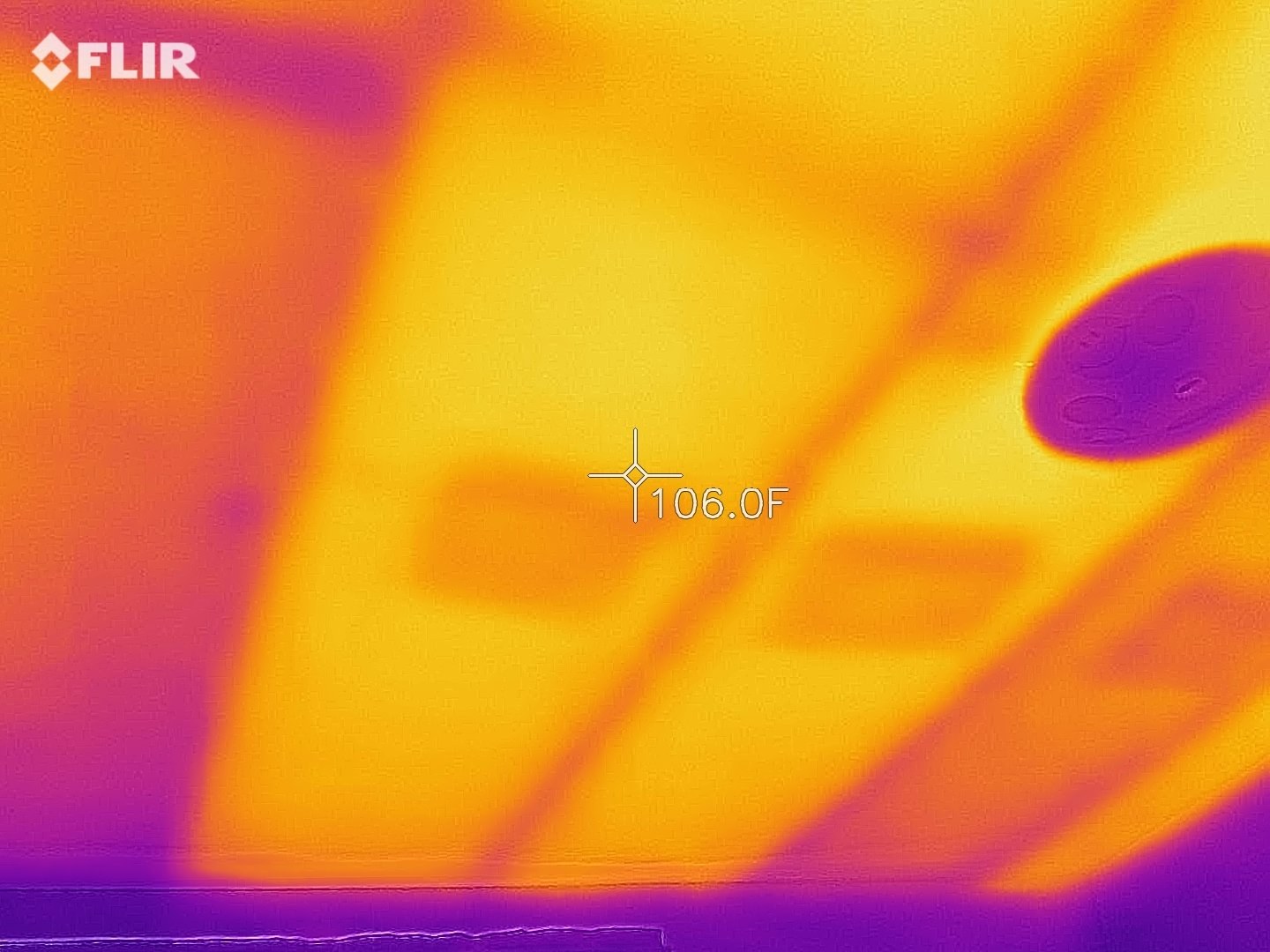
A thermal camera shows gaps in ceiling insulation. Gaps like these are what an insulation inspection is meant to catch. Photo: Anchors Aweigh Energy.
1989: someone finally looks at the ducts
In 1989, field research at Lawrence Berkeley National Laboratory found that duct problems wasted, conservatively, 30 to 40 percent of a home's conditioned air. (CEC staff report) That finding is the seed of the duct leakage test we run on nearly every HVAC change-out in San Diego today. (AAE HERS services)
Part 1 timeline
- Oct 1973–Mar 1974: Arab OPEC oil embargo.
- May 24, 1974: Warren-Alquist Act signed.
- 1975: CEC opens. HCD adopts basic energy rules.
- Dec 22, 1975: EPCA becomes law.
- 1976: CEC first adopts building energy standards.
- Mar 11, 1977: CEC adopts amended residential standards, effective (as extended) July 1, 1978.
- Nov 9, 1978: NECPA becomes law.
- Late 1970s: early HERS programs appear.
- 1981: National Shelter Industry Energy Advisory Council forms, leading to Energy Rated Homes of America.
- Early 1980s: Fannie, Freddie, FHA, and VA energy mortgages.
- 1982: first national review of HERS.
- 1986: LBL finds 34 HERS programs in 28 states.
- 1989: LBNL measures major duct losses.
Sources
- U.S. Office of the Historian, Oil Embargo 1973–1974. https://history.state.gov/milestones/1969-1976/oil-embargo
- U.S. State Dept. archive, Second Arab Oil Embargo. https://2001-2009.state.gov/r/pa/ho/time/dr/96057.htm
- CEC, 50 Years of Energy Leadership. https://www.energy.ca.gov/about/50-years-energy-leadership
- Online Archive of California, CEC Records. https://oac.cdlib.org/findaid/ark:/13030/tf896nb2mh
- Public Law 94-163 (EPCA). https://www.govinfo.gov/content/pkg/STATUTE-89/pdf/STATUTE-89-Pg871.pdf
- Public Law 95-619 (NECPA). https://www.govinfo.gov/content/pkg/STATUTE-92/pdf/STATUTE-92-Pg3206.pdf
- CEC, 2022 Building Energy Efficiency Standards. https://www.energy.ca.gov/publications/2022/2022-building-energy-efficiency-standards-residential-and-nonresidential
- Building Code Action v. ERCDC (1979) 88 Cal.App.3d 913. https://law.justia.com/cases/california/court-of-appeal/3d/88/913.html
- LBL, Implementation of Home Energy Rating Systems (OSTI). https://doi.org/10.2172/6723187
- LBL, Evaluation of the Implementation of HERS. http://escholarship.org/uc/item/2499z6m5
- RESNET, The History of RESNET (Wayback 2016). http://web.archive.org/web/2016/http://www2.resnet.us/about/our-history
- CEC staff report (TN 250298). https://efiling.energy.ca.gov/GetDocument.aspx?DocumentContentId=85032&tn=250298
- Anchors Aweigh Energy, HERS services. https://www.aae-hers.com/services/hers-ratings
Next in the series: Part 2, 1989–1999: Washington writes HERS into law, RESNET and ENERGY STAR arrive, and California builds its own HERS program.