
History · October 27, 2026
The History of HERS, Part 2: 1989 to 1999
By 1989, home energy ratings had been tried in dozens of states and energy mortgages were on the books. But there was still no common yardstick.
9 minute read · Anchors Aweigh Energy
By 1989, home energy ratings had been tried in dozens of states and energy mortgages were on the books. But there was still no common yardstick. That year, Lawrence Berkeley National Laboratory field research also found that duct problems wasted, conservatively, 30 to 40 percent of a home's conditioned air. (CEC staff report) Over the next ten years, Congress, the mortgage industry, and California each moved to fix those problems.
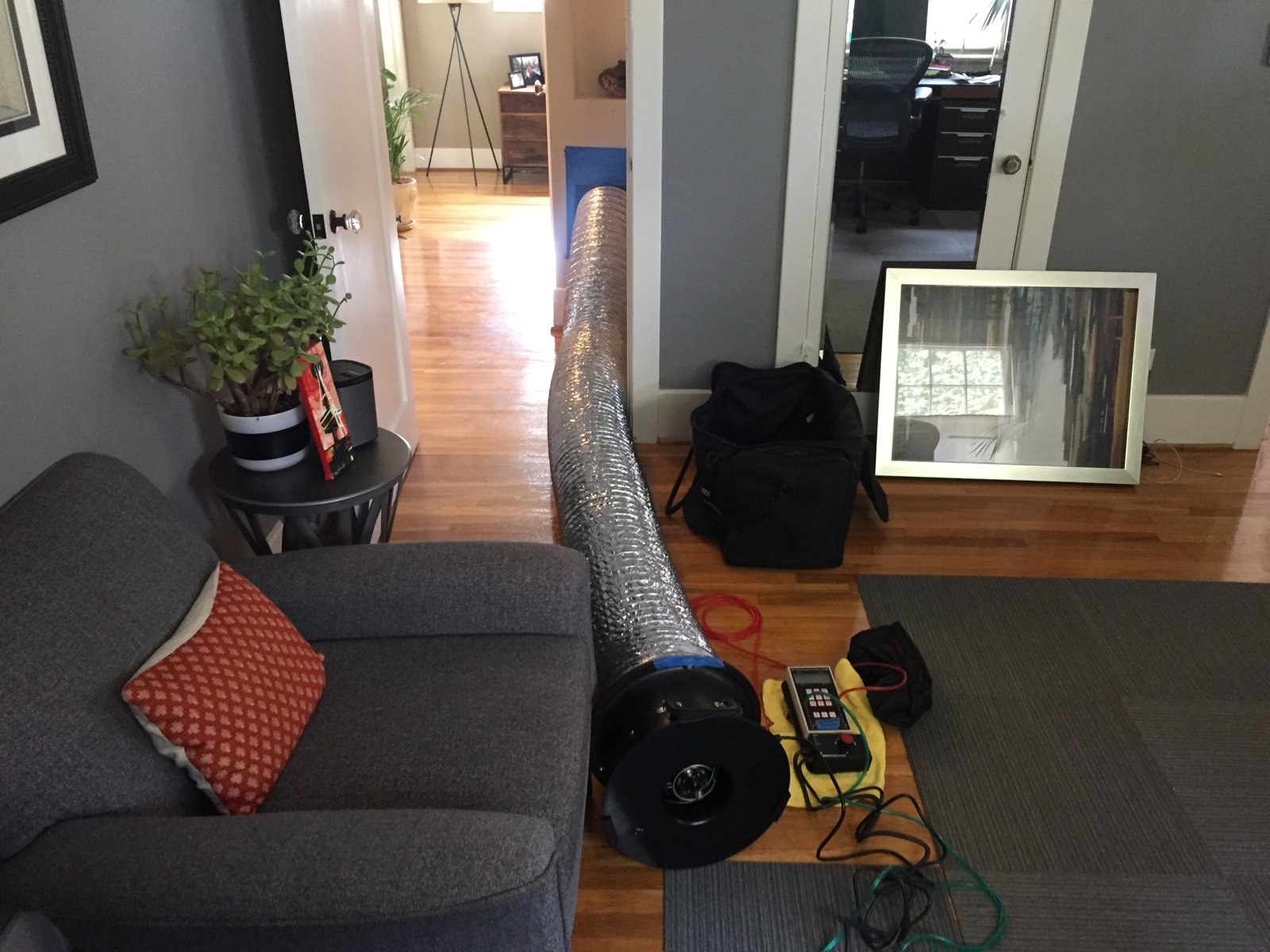
A duct leakage test set up in a living room: the fan connects to the system and the gauge reads the pressure. This is the kind of testing California's HERS rules made routine. Photo: Anchors Aweigh Energy.
1990: CHEERS is founded
CHEERS, today California's main rating provider, says it was "founded in 1990." (CHEERS About) It was founded as the California Home Energy Efficiency Rating System. The provider today is ConSol Home Energy Efficiency Rating Services, and the CEC lists it as California Home Energy Efficiency Rating Services. (CEC providers page)
1991–1992: a national collaborative
In 1991 and early 1992, DOE and HUD set up a National Collaborative on HERS and Energy Efficient Mortgages. It brought together 25 stakeholder groups, including lenders, builders, appraisers, rating providers, utilities, and states. In 1992 it published A National Program for Energy-Efficient Mortgages and Home Energy Rating Systems: A Blueprint for Action. (OSTI 402378; OSTI 10156576)
1992: the Energy Policy Act puts HERS in federal law
The Energy Policy Act of 1992 (Public Law 102-486) was approved October 24, 1992. (EPAct 1992, GovInfo) Three of its provisions matter for HERS:
- §105 defined an "energy efficient mortgage" in federal housing law.
- §106 directed HUD to start an energy efficient mortgage pilot program in five states.
- §271 directed DOE to write voluntary national guidelines for residential energy rating systems (Title I, Part 6, "Residential Energy Efficiency Rating Guidelines").
(GovInfo; GovInfo table of contents)
HUD picked Alaska, Arkansas, California, Vermont, and Virginia for the pilot. Ratings were available in 17 states in 1993 and in 47 by 1999. From 1993 to 1998, the pilot states completed 63,165 ratings. (NREL, Pilot States Program Report) The California contact in that report was Michael Hodgson of ConSol.
1994: California's HERS law
Public Resources Code §25942 directed the CEC, "on or before July 1, 1995," to set criteria for a statewide home energy rating program. The program had to have:
- one statewide rating scale;
- bill-savings estimates;
- rater training and certification, with quality assurance;
- a central database;
- labeling.
After January 1, 1996, no home energy rating services could be performed in the state unless the CEC had certified them, "if such a certification program is available." (Stats. 1994, ch. 553, effective Jan. 1, 1995.) (PRC §25942, Justia; CEC Home Energy Rating and Labeling) The CEC began building the program in 1995. (CEC staff report)
1995: three big events
- April: RESNET is founded. The national mortgage industry, the National Association of State Energy Officials (NASEO), and Energy Rated Homes of America founded the Residential Energy Services Network. (RESNET history, Wayback 2016; RESNET)
- July: DOE proposes guidelines. DOE published proposed Voluntary Home Energy Rating System Guidelines (10 CFR Part 437), developed with the HERS Council. It reopened comments in April 1996. We found no final rule. (60 FR 37949; 61 FR 15735)
- ENERGY STAR for new homes. EPA first offered the label in 1995, with third-party verification by a certified Home Energy Rater. (ENERGY STAR history)
In October 1996 the HERS Council produced a draft of national accreditation standards. RESNET and NASEO's later mortgage-industry standards built on that draft. (RESNET 2002 standards)
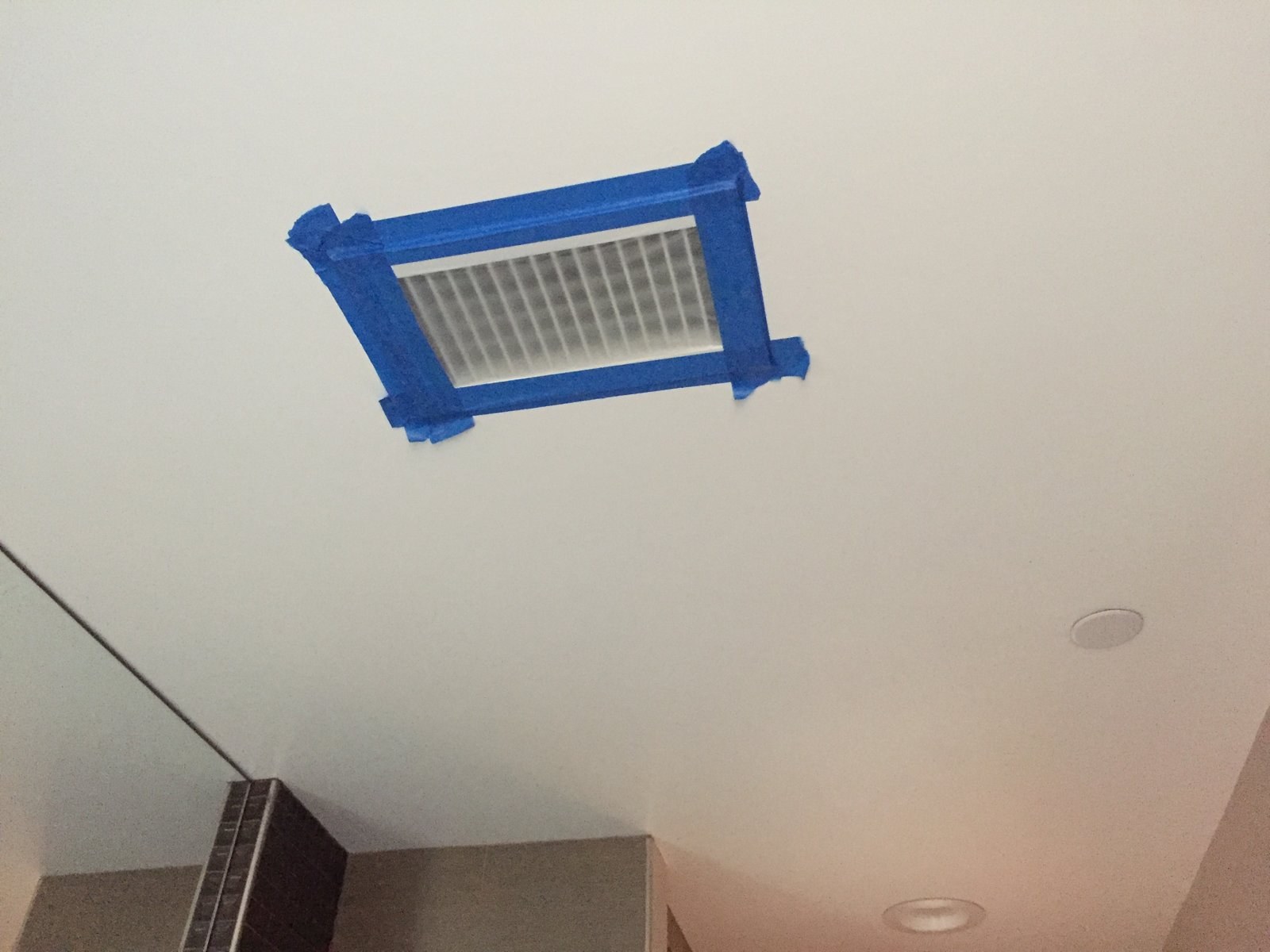
A supply register taped off before a duct leakage test, so the only air escaping is through the leaks. Photo: Anchors Aweigh Energy.
1999: California adopts its HERS regulations
The CEC adopted the Phase I HERS regulations, Title 20 §§1670–1675, under Docket 99-HERS-1. The Commission held its hearing on April 28, 1999. The rules took effect on June 17, 1999 after Office of Administrative Law approval. They created raters who perform field verification and diagnostic testing for Title 24 compliance. (CEC HERS page, Wayback 2000; CEC staff report)
That's the fork in the road. The national program grew up around mortgages and a whole-house score. California's grew up around testing whether specific code measures, starting with ducts, actually work. It's the testing we do every day. (AAE HERS services)
Part 2 timeline
- 1989: LBNL measures major duct losses.
- 1990: CHEERS founded (CHEERS' own account).
- 1991–92: DOE/HUD National Collaborative; Blueprint published in 1992.
- Oct 24, 1992: EPAct 1992 (§§105, 106, 271).
- 1993: ratings are available in 17 states.
- Jan 1, 1995: PRC §25942 amendments take effect.
- Apr 1995: RESNET is founded.
- Jul 25, 1995: DOE proposes HERS guidelines.
- 1995: ENERGY STAR new homes begins. The CEC starts HERS program work.
- Oct 1996: HERS Council draft accreditation standards.
- Jun 17, 1999: California's Title 20 HERS regulations take effect.
- 1999: ratings are available in 47 states.
Sources
- CEC staff report (TN 250298). https://efiling.energy.ca.gov/GetDocument.aspx?DocumentContentId=85032&tn=250298
- CHEERS, About. https://www.cheers.org/about/
- CEC, HERS Providers. https://www.energy.ca.gov/programs-and-topics/programs/home-energy-rating-system-hers-program/home-energy-rating-system
- OSTI 402378, Linking HERS with Energy Efficiency Financing (1996). https://doi.org/10.2172/402378
- OSTI 10156576, A National Program for EEMs and HERS: Blueprint (1992). https://doi.org/10.2172/10156576
- Energy Policy Act of 1992, as amended (GovInfo). https://www.govinfo.gov/content/pkg/COMPS-8931/pdf/COMPS-8931.pdf
- GovInfo, EPAct table of contents. https://www.govinfo.gov/content/pkg/COMPS-10424/pdf/COMPS-10424.pdf
- NREL, Pilot States Program Report: HERS and EEMs. https://docs.nlr.gov/docs/fy00osti/27722.pdf
- Public Resources Code §25942. https://law.justia.com/codes/california/code-prc/division-15/chapter-10-8/section-25942/
- CEC, Home Energy Rating and Labeling Program. https://www.energy.ca.gov/programs-and-topics/programs/home-energy-rating-and-labeling-program
- RESNET history (Wayback 2016). http://web.archive.org/web/2016/http://www2.resnet.us/about/our-history
- RESNET, About. https://www.resnet.us/about/
- 60 FR 37949 (July 25, 1995). https://www.federalregister.gov/documents/1995/07/25/95-18015/voluntary-home-energy-rating-system-guidelines
- 61 FR 15735 (April 9, 1996). https://www.govinfo.gov/content/pkg/FR-1996-04-09/html/96-8782.htm
- ENERGY STAR new homes history. https://www.energystar.gov/newhomes/history
- RESNET 2002 Mortgage Industry National HERS Standards. https://www.resnet.us/wp-content/uploads/RESNET-Mortgage-industry-National-HERS-Standards-2002.pdf
- CEC HERS page (Wayback 2000). http://web.archive.org/web/2000/http://www.energy.ca.gov/HERS/
- Anchors Aweigh Energy, HERS services. https://www.aae-hers.com/services/hers-ratings
Previously: Part 1, 1970s–1989. Next in the series: Part 3, 1999 to today: providers, the HERS Index, 45L, the ECC rename, and how California compares with the national program.